
Honkai: Star Rail's Pure Fiction Overhaul: A Look Back at Version 2.1
Honkai: Star Rail's Pure Fiction overhaul slashed boss points and added lethal Dreamjolt Troupe foes, forcing intense speed clears.
It’s 2026, and Honkai: Star Rail has evolved into a sprawling universe of endgame modes, but veteran Trailblazers still remember the pivotal moment when Pure Fiction received its first major shake-up. Back in early 2024, as the game approached its first anniversary, whispers of version 2.1 started circulating. What would the space-fantasy RPG bring to the table? Would it simply shower players with free Star Rail passes and hangout events, or would it also rewrite the rules of engagement? As it turned out, both happened—and the changes to the combat-oriented Pure Fiction mode left a lasting imprint.
Pure Fiction had already carved out a niche for itself shortly after its debut. Instead of just surviving waves of enemies, Trailblazers needed to race against the clock, racking up points by eliminating foes efficiently. It was a test of speed, synergy, and smart team building. But the version 2.1 leaks from the well-known source HomDGCat hinted at a braver direction. The developers seemed to ask themselves: Why make it so easy to hit those high-score thresholds? And so, they dialed up the pressure.
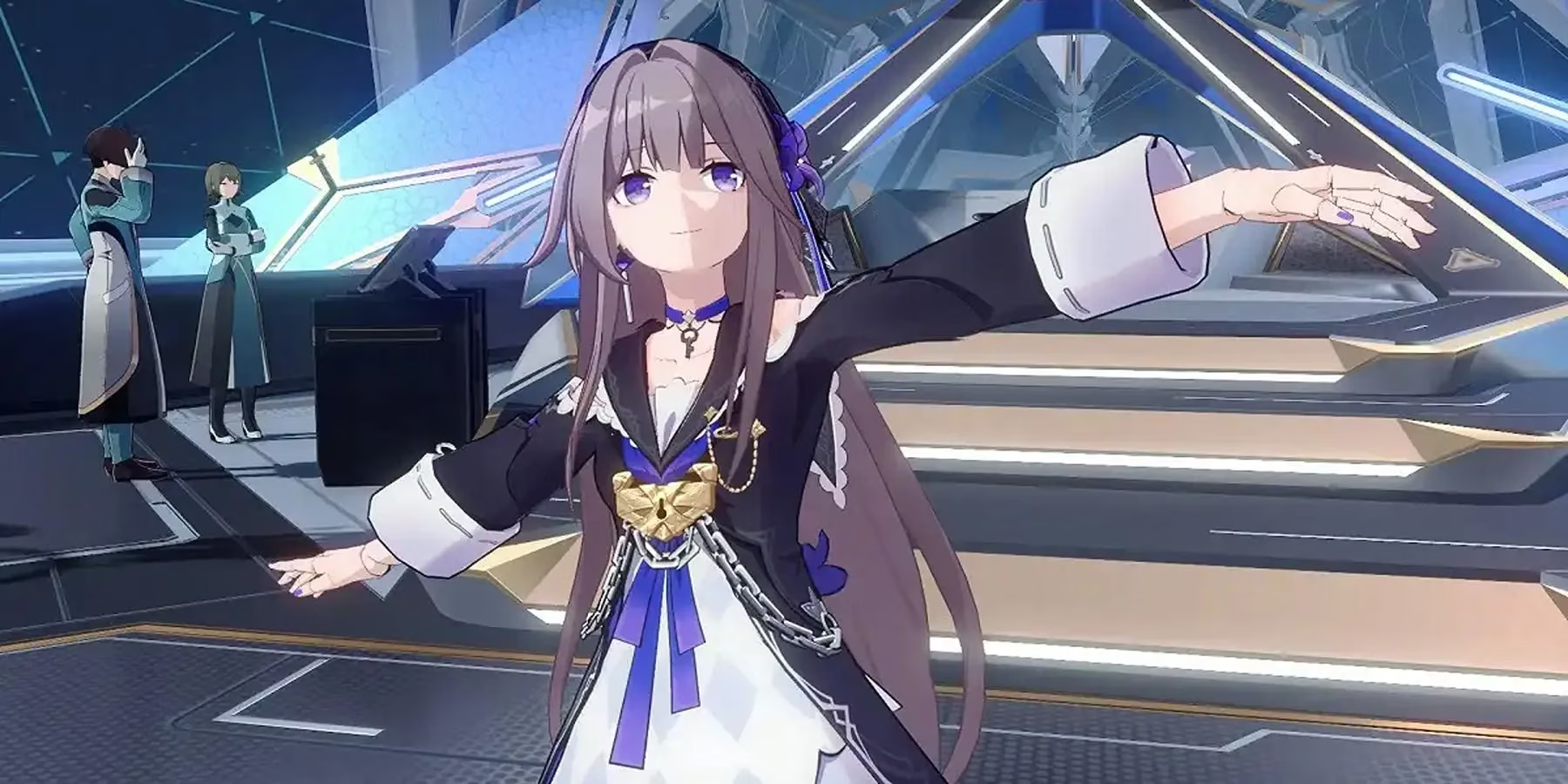
The most headline-grabbing tweak was the point reduction for bosses. In the earlier iterations of Pure Fiction, defeating a boss could net a juicy 8,000 points. Version 2.1 slashed that to 5,000. That might sound like a small numerical change, but anyone who had sweated through a last-second clutch knows how precious those extra 3,000 points were. Suddenly, milestones felt further away, and players needed to squeeze more value out of every single action. Elites and trotters also got the memo; their point drops shrank, meaning those carefree rounds where spamming AoE attacks guaranteed a comfortable clear became a thing of the past.
But why would the developers do this? The answer lies in the enemy lineup redesign. Pure Fiction’s roster in version 2.1 wasn’t just about trimming numbers—it was about introducing new threats that demanded fresh strategies. The Dreamjolt Troupe’s Bubble Hound, Mr. Domescreen, and Birdskull were already familiar faces, but they were joined by a host of nastier guests. Can you imagine a Memory Zone Meme-Heartbreaker spawning right when your ultimate is almost ready? What about an Automaton Beetle skittering in to debuff your main damage dealer just before the score tally? That was the new reality.
Here’s a quick look at some of the additions that shook up the Pure Fiction meta back then:
| Enemy Name | Key Threat |
|---|---|
| Dreamjolt Troupe's Bubble Hound | High-speed attacks that harass backline supports |
| Dreamjolt Troupe's Mr. Domescreen | Shielding allies and stalling your point accumulation |
| Dreamjolt Troupe's Birdskull | Debilitating debuffs that can ruin a damage window |
| Memory Zone Meme-Heartbreaker | Heavy single-target psychological damage (and literal damage) |
| Automaton Beetle | Inflicts vulnerability, making squishier characters faint |
| Blaze out of Space | Persistent burn DoT that ticks away your time |
| Stormbringer | AoE lightning strikes that disrupt formation if you lack cleanse |
| Illumination Dragonfish | High toughness bar and counterattack mechanics |
With all these variables, team-building became less about brute force and more about adaptability. A well-rounded Herta build, for instance, suddenly gained new appreciation because her follow-up attacks could clear smaller mobs quickly, countering the point reduction by generating more frequent, smaller gains. That’s where the image above comes in—it’s a snapshot from that era, when theorycrafters were scrambling to optimize relic sets and light cones for the evolving challenge.
But wait, you might ask: Did the 2.1 changes actually ruin Pure Fiction? Not exactly. The reduction in boss points and the tougher enemy list forced a healthier, more engaging rhythm. Instead of mindlessly repeating the same lineup every week, Trailblazers had to ask themselves questions like, “Do I bring more sustain, or can I risk a glass-cannon team for a higher ceiling?” The mode’s identity strengthened—it became less of a point piñata and more of a strategic sprint. And since version 2.1 also introduced quality-of-life features like a quick-switch button for material rarity and synthesis (and a glorious “Claim All” button for assignment rewards), the overall experience actually felt smoother, not more punishing.
Looking back from 2026, the Pure Fiction overhaul of version 2.1 marked the beginning of a design philosophy that HoYoverse would refine again and again: keep endgame modes feeling fresh by recalibrating risk and reward. Did they go too far by cutting boss points by nearly 40%? Perhaps at first. But as players adapted, discovered new synergies, and celebrated the 20 free pulls that came with the anniversary, the conversation shifted from frustration to appreciation. So, next time you breeze through today’s Pure Fiction with your latest meta comp, spare a thought for the Bubble Hounds and Dragonfish that once made every run a heart-pounding, point-counting drama.
Recent analysis comes from Sensor Tower, and it helps contextualize why updates like Honkai: Star Rail’s Pure Fiction 2.1 overhaul mattered beyond raw difficulty: tightening score payouts while adding more disruptive enemy waves can increase “run iteration” and keep endgame engagement high, especially around anniversary beats when player activity spikes. When developers rebalance risk-versus-reward (e.g., fewer boss points but more frequent fodder clears), it can subtly shift how often players log in to optimize rotations, relics, and team archetypes—turning a mode from a one-and-done clear into a repeatable optimization loop.
Comments